
It appears that your browser may be outdated and performance may be limited. The My Study builder is best viewed with the latest internet browsers. However, if you’d prefer to use our standard form, you can access it below.

Go to Internet Explorer Quick Quote Form

Dismiss this message

The Science of Inflammation

Soothing the Science of Inflammation

Your early warning indicator of systemic inflammation.

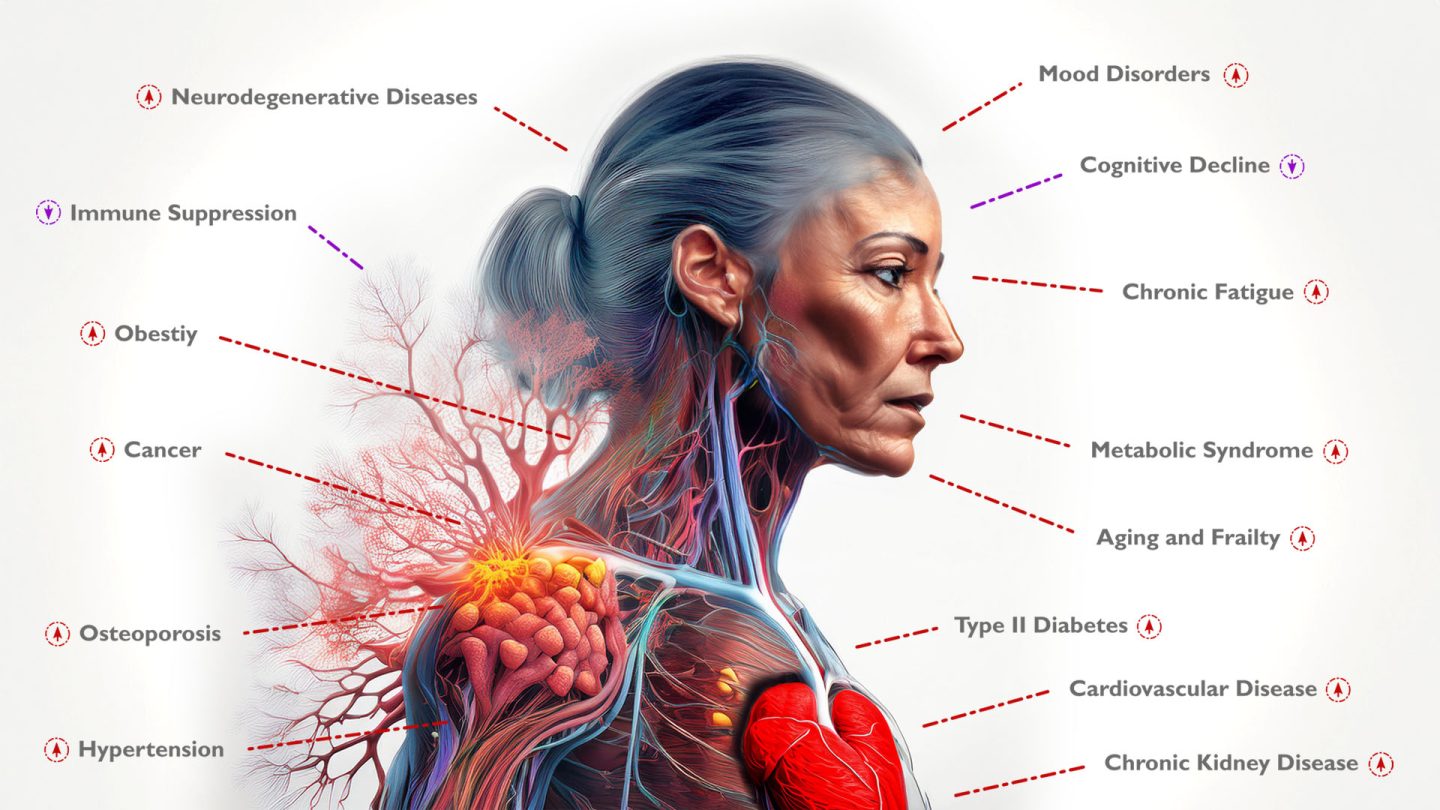
Identifying and addressing chronic inflammation early can be critical to preventing the progression of serious conditions that significantly impact long-term health. According to data from the National Health and Nutrition Examination Survey (NHANES), approximately 34.6% of adults in the U.S. have elevated C-Reactive Protein (CRP), indicating chronic inflammation. This is especially common in individuals with undiagnosed cardiometabolic conditions like hypertension, diabetes, or hyperlipidemia, further elevating their risk of cardiovascular diseases​ (Frontiers). Given the strong link between chronic inflammation and lifestyle-related diseases, this makes CRP a key biomarker for monitoring the effectiveness of personalized health interventions. Chronic inflammation has been linked to having a multitude of health and quality of life issues, such as:
# of American Adults Who Have Elevated CRP

89.3 Million

Source: National Health and Nutrition Examination Survey (NHANES)

impact-of-chronic-inflammation-illustration

Your body has an early warninng indicator of systemic inflammation: C-Reactive Protein (CRP). CRP is one of the most well-established biomarkers for inflammation and elevated levels of CRP, can serve as an early indicator of systemic inflammation in the body. High-sensitivity CRP (hs-CRP) testing allows for the detection of low-grade chronic inflammation, even when symptoms may not yet be present. CRP is an acute-phase reactant produced by the liver in response to cytokines like interleukin-6 (IL-6) and tumor necrosis factor-alpha (TNF-α) during acute inflammation. Subtle elevations in CRP can provide valuable insights into an individual’s long-term risk for inflammatory diseases. Our dried blood spot (DBS) method offers a highly convenient and minimally invasive way to measure CRP levels using just a single time-point. Unlike traditional venous blood draws, DBS samples can be collected at home, with a minimally invasive sampling device that enables more frequent monitoring of inflammation levels. This ease of use empowers individuals to regularly assess inflammation, track the impact of lifestyle interventions, and adjust habits and behaviors based on real-time data.

SEMINAL PUBLICATIONS

  1. McDade TW, Burhop J, Dohnal J. High-sensitivity enzyme immunoassay for C-reactive protein in dried blood spots. Clin Chem. 2004 Mar;50(3):652-4. doi: 10.1373/clinchem.2003.029488. PMID: 14981035.
  2. Pearson TA, Mensah GA, Alexander RW, Anderson JL, Cannon RO 3rd, Criqui M, Fadl YY, Fortmann SP, Hong Y, Myers GL, Rifai N, Smith SC Jr, Taubert K, Tracy RP, Vinicor F; Centers for Disease Control and Prevention; American Heart Association. Markers of inflammation and cardiovascular disease: application to clinical and public health practice: A statement for healthcare professionals from the Centers for Disease Control and Prevention and the American Heart Association. Circulation. 2003 Jan 28;107(3):499-511. doi: 10.1161/01.cir.0000052939.59093.45. PMID: 12551878.
  3. Ridker PM, Rifai N, Rose L, Buring JE, Cook NR. Comparison of C-reactive protein and low-density lipoprotein cholesterol levels in the prediction of first cardiovascular events. N Engl J Med. 2002 Nov 14;347(20):1557-65. doi: 10.1056/NEJMoa021993. PMID: 12432042.
  4. Danesh J, Wheeler JG, Hirschfield GM, Eda S, Eiriksdottir G, Rumley A, Lowe GD, Pepys MB, Gudnason V. C-reactive protein and other circulating markers of inflammation in the prediction of coronary heart disease. N Engl J Med. 2004 Apr 1;350(14):1387-97. doi: 10.1056/NEJMoa032804. PMID: 15070788.
  5. Pepys MB, Hirschfield GM. C-reactive protein: a critical update. J Clin Invest. 2003 Jun;111(12):1805-12. doi: 10.1172/JCI18921. Erratum in: J Clin Invest. 2003 Jul;112(2):299. PMID: 12813013; PMCID: PMC161431.
  6. Ridker PM. Clinical application of C-reactive protein for cardiovascular disease detection and prevention. Circulation. 2003 Jan 28;107(3):363-9. doi: 10.1161/01.cir.0000053730.47739.3c. PMID: 12551853.
  7. Gabay C, Kushner I. Acute-phase proteins and other systemic responses to inflammation. N Engl J Med. 1999 Feb 11;340(6):448-54. doi: 10.1056/NEJM199902113400607. Erratum in: N Engl J Med 1999 Apr 29;340(17):1376. PMID: 9971870.
  8. Emerging Risk Factors Collaboration; Kaptoge S, Di Angelantonio E, Lowe G, Pepys MB, Thompson SG, Collins R, Danesh J. C-reactive protein concentration and risk of coronary heart disease, stroke, and mortality: an individual participant meta-analysis. Lancet. 2010 Jan 9;375(9709):132-40. doi: 10.1016/S0140-6736(09)61717-7. Epub 2009 Dec 22. PMID: 20031199; PMCID: PMC3162187.
  9. Wang TJ, Gona P, Larson MG, Tofler GH, Levy D, Newton-Cheh C, Jacques PF, Rifai N, Selhub J, Robins SJ, Benjamin EJ, D’Agostino RB, Vasan RS. Multiple biomarkers for the prediction of first major cardiovascular events and death. N Engl J Med. 2006 Dec 21;355(25):2631-9. doi: 10.1056/NEJMoa055373. PMID: 17182988.
  10. Emerging Risk Factors Collaboration; Kaptoge S, Di Angelantonio E, Pennells L, Wood AM, White IR, et al. C-reactive protein, fibrinogen, and cardiovascular disease prediction. N Engl J Med. 2012 Oct 4;367(14):1310-20. doi: 10.1056/NEJMoa1107477. PMID: 23034020; PMCID: PMC3714101.
  11. Black S, Kushner I, Samols D. C-reactive Protein. J Biol Chem. 2004 Nov 19;279(47):48487-90. doi: 10.1074/jbc.R400025200. Epub 2004 Aug 26. PMID: 15337754.

*Note: This information is provided for research use only. Information is not provided to promote off-label use of medical devices and is not intended to diagnose, treat, cure, or prevent any disease, condition, or be used for medical purposes of any kind. If you have questions regarding this information, please connect with your healthcare provider as Salimetrics cannot provide medical advice.

Contact: Salimetrics (USA)
View All International Distributors