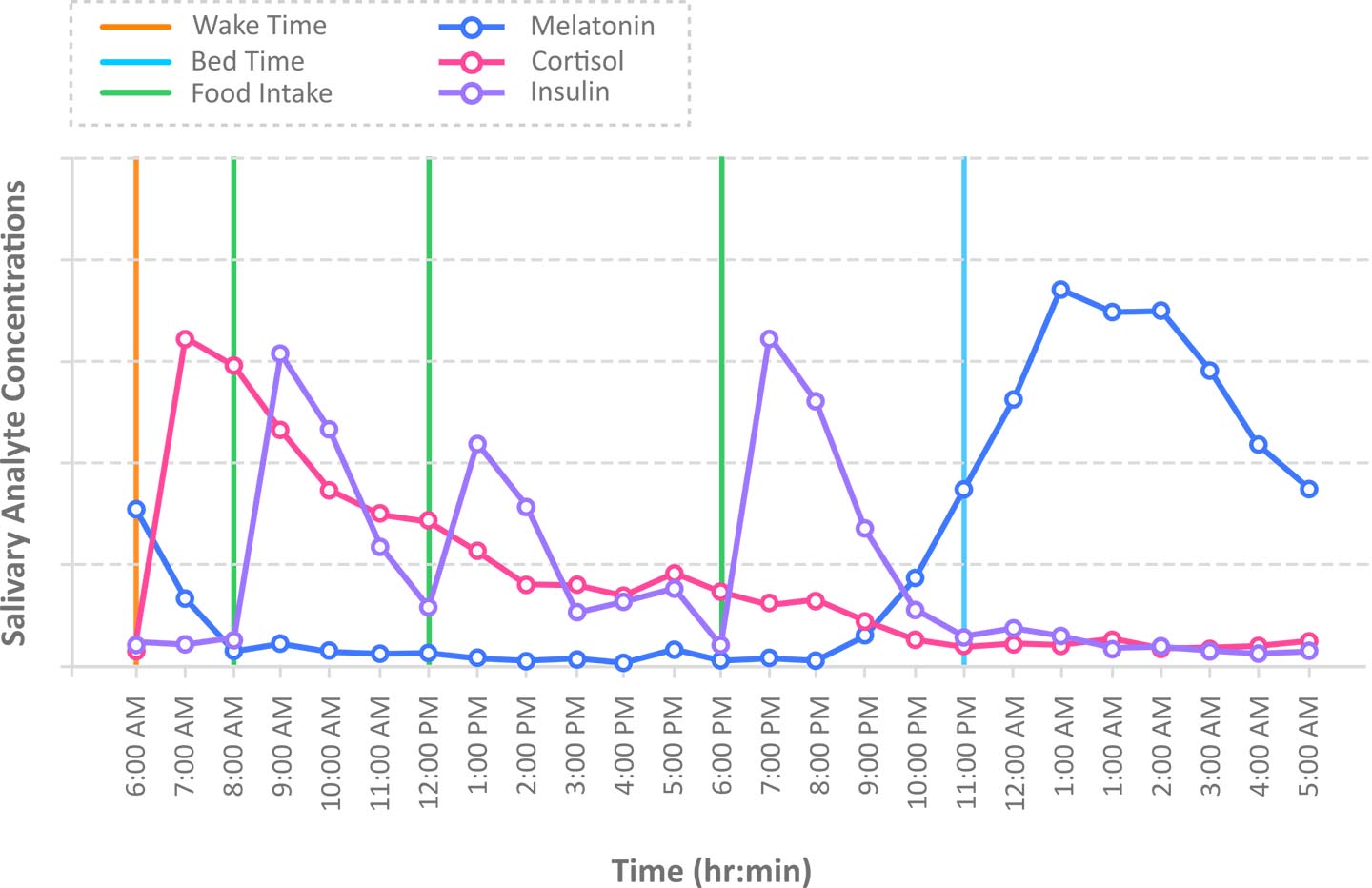
The Rhythm of a Healthy Lifestyle
Your physiology has natural rhythms, some are diurnal, circadian, and others ultradian. These rhythms work in sync to maintain balance and overall wellness. Picture your rhythm like the music at a concert. We hear music with a defined harmony produced because the sounds the instruments produce are aligned given a set rhythm. Now consider what’s produced when the components of the orchestra are reading different music, have different timing, or playing notes that are not in sync with the other sections. The difference in the product is striking.
Our bodies operate on a circadian rhythm, which determines when we should be awake, asleep, eating, relaxing, or active, and is guided by an internal master clock called the suprachiasmatic nucleus (SCN). This “body clock” coordinates critical physiological processes in our bodies, such as regulating blood pressure, heart rate, breathing, alertness, and hormone levels throughout the day. Healthy lifestyle choices—such as maintaining good sleep, diet, and exercise habits—help keep this rhythm in sync, promoting balance in our overall health. Health, longevity, and wellness are often associated with the proper alignment and coordination between these systems.
Environmental ques, such as the onset of offset of the daily dark-light cycle, often orchestrate the on and off switches for each of these critical processes. Unfortunately, our contemporary lifestyles are rarely in-sync with these natural rhythms. When our bodies respond too early or too late, or not at all to these natural environmental ques, our wellness becomes out of sync as well and our bodies suffer the consequences.
 Contact: Salimetrics (USA)